

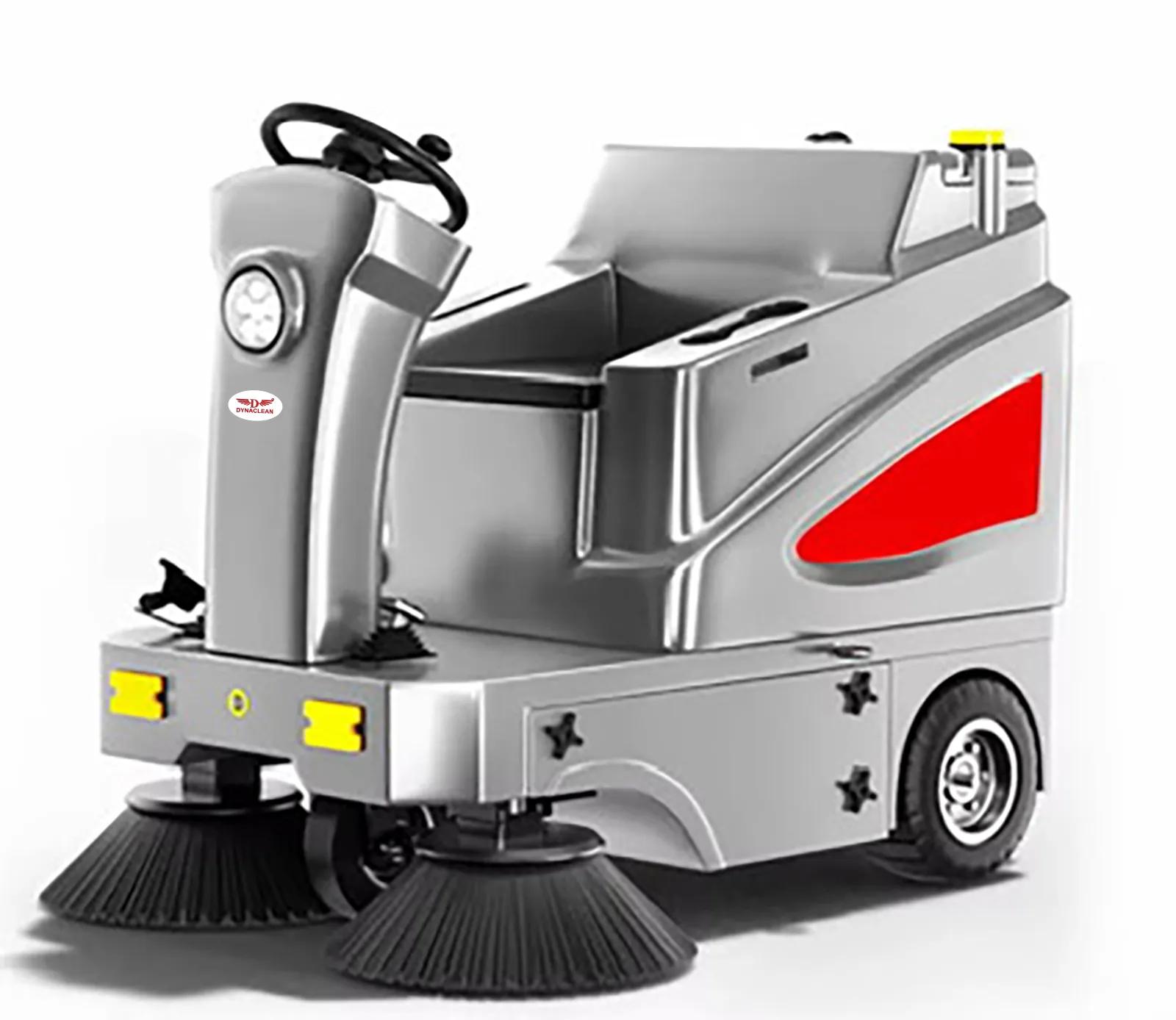
Sustainable cleaning has become an important priority for businesses, industries, warehouses, commercial facilities, and public spaces. As organizations focus on reducing their environmental impact, they are increasingly looking for cleaning equipment that offers high performance while using resources efficiently. Ride On Sweeper Machines are an excellent solution for large-area cleaning because they combine productivity, efficient waste collection, dust control, and reduced resource consumption.
Unlike traditional manual sweeping methods, ride-on sweepers use mechanical brushes and collection systems to remove dust, dirt, leaves, debris, and other dry waste from large surfaces. They can be used in factories, warehouses, parking areas, shopping malls, airports, institutions, and other commercial or industrial environments.
What Is a Ride On Sweeper Machine?
A Ride On Sweeper Machine is a motorized cleaning machine operated by a person from a seated driving position. It is specifically designed to clean large areas quickly and efficiently. The machine generally uses rotating brushes to collect dust and debris and directs the collected material into an integrated waste hopper.
Ride-on sweepers are available in different sizes and configurations to meet the requirements of various cleaning applications. Their ability to cover large areas makes them particularly useful for industrial and commercial cleaning operations.
By replacing time-consuming manual sweeping with mechanized cleaning, businesses can improve productivity while maintaining consistent cleaning standards.
Reduced Water Consumption
One of the biggest advantages of ride-on sweepers is their ability to perform effective dry cleaning. Traditional cleaning methods may require significant amounts of water, especially when cleaning large floors and outdoor areas. Ride-on sweepers primarily collect dry dust and debris without depending on continuous water usage.
Reducing water consumption can contribute to more sustainable facility management. Businesses that operate large warehouses, factories, parking areas, and commercial spaces can benefit from a cleaning method that requires fewer water resources.
For organizations focusing on environmentally responsible operations, using a ride-on floor sweeper can be an effective way to optimize cleaning while reducing unnecessary water usage.
Improved Cleaning Efficiency
Sustainability also means using time, energy, and manpower efficiently. Manual sweeping can be slow when large areas need to be cleaned regularly. A ride-on sweeper can cover extensive floor areas in less time, allowing cleaning teams to complete routine maintenance more efficiently.
The combination of rotating brushes, powerful suction or dust-control systems, and large waste hoppers allows these machines to collect substantial quantities of debris during a cleaning cycle.
Improved cleaning speed can help businesses maintain cleaner facilities without dedicating excessive time and resources to daily sweeping operations.
Better Dust Control
Dust management is another important aspect of sustainable industrial cleaning. Conventional sweeping can sometimes disturb fine dust particles and allow them to become airborne. Modern industrial ride-on sweepers are designed with dust-control and filtration systems that can help reduce the spread of airborne dust during operation.
Effective dust collection is particularly important in manufacturing facilities, warehouses, logistics centers, and other environments where excessive dust can affect workplace cleanliness.
By collecting dust directly into the machine's hopper and controlling airborne particles, ride-on sweepers can support cleaner and more controlled working environments.
Reduced Dependence on Cleaning Chemicals
Many routine cleaning activities involve the use of cleaning chemicals. While chemicals have an important role in certain cleaning applications, unnecessary chemical use can increase operating costs and environmental impact.
Ride-on sweepers primarily use mechanical brush action to collect dry dirt, dust, and debris. Because they are designed for dry sweeping, they can reduce the need for chemical-based cleaning products for suitable applications.
This makes ride-on sweeping equipment a practical option for businesses looking to develop more responsible and resource-efficient cleaning processes.
Efficient Waste Collection
Another sustainability benefit of ride-on sweepers is their integrated waste collection system. Instead of pushing dust and debris from one location to another, the machine collects the material into a dedicated hopper.
Efficient waste collection helps cleaning teams gather debris in one place, making it easier to empty and manage the collected waste appropriately. This can improve the overall organization of facility cleaning and waste-handling processes.
For large industrial sites, efficient waste collection can make routine cleaning more systematic and productive.
Reduced Manual Effort
Traditional sweeping requires considerable physical effort, particularly when large areas need to be cleaned every day. Ride-on sweepers reduce the physical workload by allowing an operator to control the machine while seated.
This can help cleaning teams work more efficiently and maintain consistent cleaning performance across large facilities. Reduced manual effort also allows businesses to allocate their workforce more effectively to other important maintenance tasks.
A ride-on sweeping machine can therefore contribute to both operational efficiency and a more organized cleaning process.
Energy-Efficient Cleaning Operations
Modern cleaning equipment is increasingly designed with efficiency in mind. Depending on the model and application, ride-on sweepers may be available with battery-powered or other efficient power systems.
Battery-operated ride-on sweepers can be particularly useful for indoor applications because they can provide cleaning performance without producing direct exhaust emissions during operation. They can also support quieter cleaning in environments such as warehouses, commercial buildings, and institutions.
Selecting the appropriate machine and operating it according to manufacturer recommendations can help businesses achieve efficient cleaning performance while managing energy consumption.
Longer-Term Cost and Resource Savings
Sustainable cleaning can also provide financial benefits. When businesses use equipment that cleans large areas efficiently, they can potentially reduce the time, labor, water, and other resources required for routine sweeping.
Ride-on sweepers are designed for repeated commercial and industrial use, making them a practical investment for facilities with large cleaning requirements. Proper machine maintenance, regular inspections, and correct operation can further help maintain performance and extend equipment service life.
A well-maintained industrial sweeper machine can provide reliable cleaning performance over an extended period while supporting efficient facility management.
Applications of Ride On Sweepers
Ride-on sweepers can support sustainable cleaning across many industries and facilities. Common applications include:
Manufacturing plants and factories
Warehouses and logistics centers
Shopping malls and commercial buildings
Parking areas and garages
Airports and transportation facilities
Educational institutions
Hospitals and large campuses
Industrial yards and outdoor areas
Hospitality and large public facilities
Their ability to clean large surfaces efficiently makes them suitable for environments where traditional manual sweeping would require significant time and manpower.
How Ride On Sweepers Contribute to Green Cleaning
Green cleaning focuses on reducing waste and unnecessary resource consumption while maintaining effective cleaning standards. Ride-on sweepers support this approach through several key benefits.
They can reduce water consumption through dry sweeping, improve dust collection, minimize unnecessary chemical use, and increase productivity. Their ability to cover large areas efficiently can also help businesses optimize labor and cleaning schedules.
When combined with responsible waste disposal, proper machine maintenance, and efficient facility management practices, ride-on sweepers can become an important part of an organization's broader sustainability strategy.
Choosing the Right Ride On Sweeper
Selecting the right ride-on sweeper machine is essential for achieving sustainable cleaning results. Businesses should consider factors such as cleaning area, surface type, machine capacity, brush configuration, dust filtration, power source, operating time, maintenance requirements, and waste hopper capacity.
The machine should match the specific cleaning requirements of the facility. Choosing appropriately sized equipment can prevent unnecessary energy consumption while ensuring that cleaning tasks are completed effectively.
Regular maintenance is equally important. Cleaning filters, inspecting brushes, checking batteries where applicable, and following recommended maintenance schedules can help maintain machine efficiency and performance.
Conclusion
Ride On Sweeper Machines provide an efficient and practical approach to sustainable cleaning. By reducing water consumption, improving cleaning productivity, supporting dust control, minimizing unnecessary chemical use, and optimizing manpower, these machines can help businesses develop more resource-efficient cleaning operations.
For factories, warehouses, commercial facilities, parking areas, and other large spaces, investing in a reliable industrial ride-on sweeper can improve cleanliness while supporting long-term sustainability goals. As businesses continue to prioritize environmentally responsible operations, modern ride-on sweeping technology can play an important role in creating cleaner, more efficient, and sustainable workplaces.