

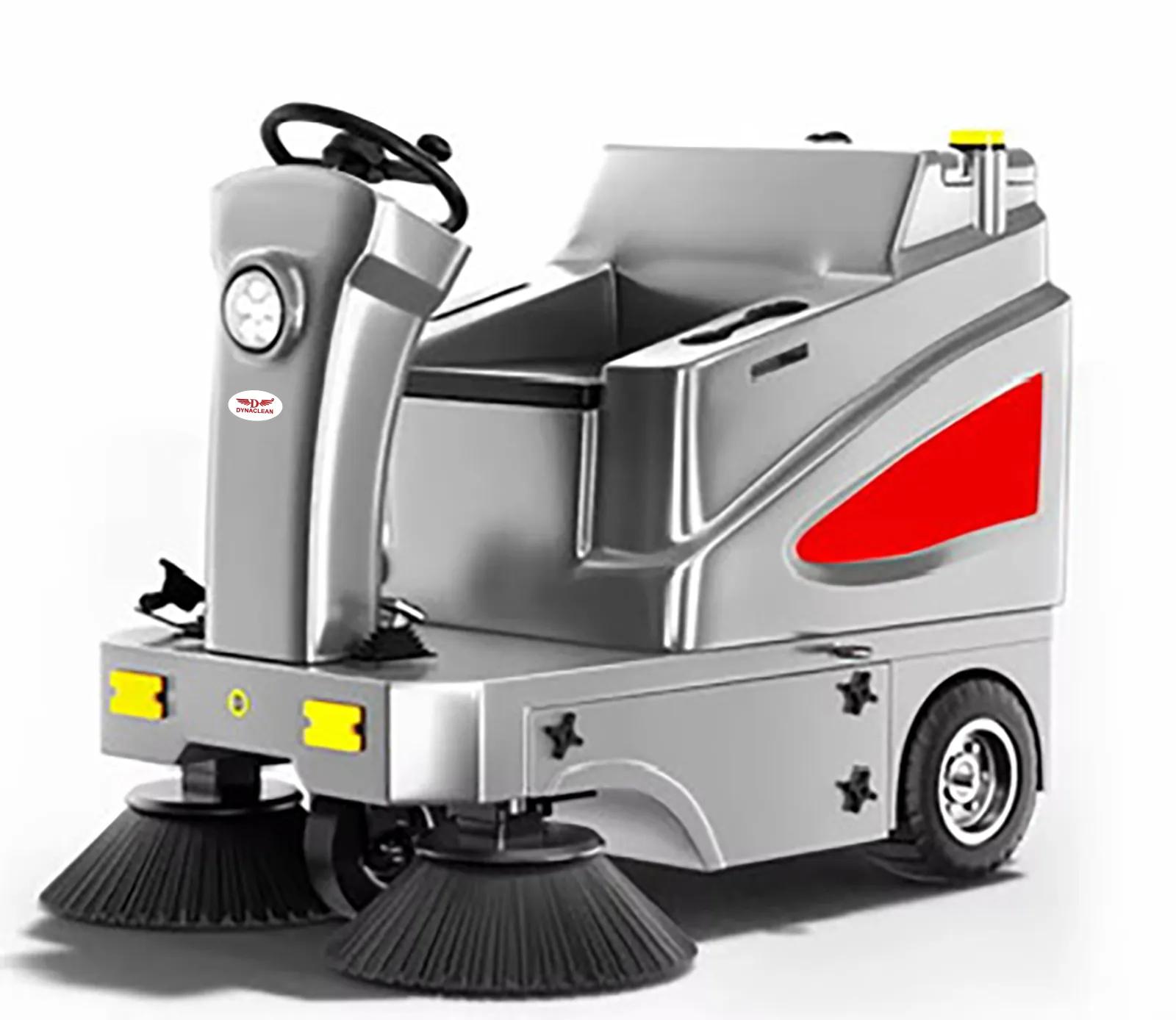
Sustainable cleaning has become an important priority for businesses, industries, warehouses, commercial facilities, parking areas, airports, and other large spaces. Organizations are increasingly looking for cleaning solutions that provide excellent results while reducing water consumption, energy usage, waste, and operating costs. This is where a ride on sweeper machine can play an important role.
Unlike traditional cleaning methods that may require significant manual effort and resources, ride on sweepers use mechanical brushes, suction systems, and dust-collection technology to remove dirt and debris efficiently. Their ability to clean large areas quickly makes them a practical solution for businesses that want to improve productivity while supporting environmentally responsible cleaning practices.
What Is a Ride On Sweeper Machine?
A ride on sweeper machine is a mechanized cleaning equipment designed to sweep and collect dust, dirt, leaves, debris, and other dry waste from large surfaces. An operator sits on the machine and controls its movement, allowing extensive areas to be cleaned more efficiently than with conventional manual sweeping.
These machines are commonly used in factories, warehouses, parking lots, logistics centers, airports, shopping complexes, commercial buildings, and industrial facilities. Depending on the model, ride on sweepers can feature rotating brushes, powerful vacuum systems, dust filters, large debris containers, and battery-powered operation.
Reduced Water Consumption
One of the biggest advantages of sustainable cleaning is reducing unnecessary water consumption. Traditional cleaning practices may involve water for washing floors and removing dust and dirt. However, many dry surfaces can be effectively cleaned through mechanical sweeping without excessive water.
A ride on sweeping machine primarily uses brushes and suction to collect dry dust and debris. This allows facilities to reduce their dependence on water-intensive cleaning methods. For large industrial spaces, even a small reduction in water usage can contribute to significant resource savings over time.
Using mechanical sweeping as part of a broader cleaning strategy can therefore help organizations develop more water-efficient maintenance practices.
Lower Dependence on Chemical Cleaners
Another way ride on sweepers support sustainable cleaning is by reducing the need for chemical cleaning products during routine dry sweeping. Dust, sand, leaves, paper, and other loose debris can often be removed mechanically without using detergents or harsh chemicals.
Reduced chemical usage can help minimize waste associated with cleaning products and support a cleaner maintenance process. Businesses can reserve chemical cleaning solutions for applications where they are genuinely required instead of using them for routine dust and debris removal.
This approach can be particularly useful in industrial cleaning, where large areas may need frequent maintenance.
Better Dust Collection and Filtration
Dust control is an important part of sustainable and responsible facility maintenance. When dust is disturbed during manual sweeping, fine particles can become airborne and spread to surrounding areas.
Modern industrial ride on sweepers often incorporate dust-control and filtration systems designed to capture particles during sweeping. Depending on the machine design and filter technology, these systems can help reduce the amount of dust released back into the environment.
Improved dust collection also helps maintain cleaner floors and surrounding areas. Regular sweeping can prevent dust and debris from accumulating, supporting better housekeeping standards in factories, warehouses, and commercial facilities.
Efficient Cleaning of Large Areas
Sustainability is closely connected with operational efficiency. A cleaning machine that can cover a large area in less time may help reduce the resources required for routine maintenance.
Ride on sweepers are designed with wide cleaning paths and efficient brush systems, enabling operators to cover large floor areas quickly. Compared with manual sweeping, mechanized cleaning can improve productivity and provide more consistent results.
For example, warehouses and manufacturing facilities often have extensive floor areas that require regular cleaning. Using a ride on sweeper machine for industrial cleaning can help operators complete these tasks more efficiently while maintaining consistent cleaning performance.
Reduced Labor and Resource Requirements
Manual sweeping requires continuous physical effort and can take considerable time when large areas are involved. Ride on sweepers reduce the physical workload by allowing operators to control the machine while seated.
Although trained operators are still required, the machine can significantly improve cleaning productivity. One operator can cover a large area efficiently, helping organizations manage their cleaning workforce more effectively.
Better productivity can also contribute to sustainability because fewer operating hours may be needed to complete the same cleaning task, depending on the facility, machine, and cleaning conditions.
Battery-Powered Cleaning Options
Many modern ride on sweepers are available with battery-powered systems. Battery-operated cleaning equipment can be useful for facilities that want to reduce dependence on fuel-powered machines for indoor and outdoor cleaning applications.
Battery-powered sweepers can also be suitable for warehouses, production facilities, shopping areas, and other locations where low-emission cleaning equipment is preferred.
Choosing the right battery technology, charging practices, and machine size can further improve operational efficiency. Proper battery maintenance is also important for achieving reliable performance and extending battery life.
Better Waste Collection and Disposal
Ride on sweepers collect dust and debris into a dedicated hopper or collection container. This provides a more organized approach to handling dry waste compared with manual sweeping, where collected debris may be spread or transferred through multiple steps.
Controlled waste collection makes it easier for facility teams to remove accumulated debris and dispose of it according to their waste-management procedures.
For businesses implementing broader sustainability programs, efficient waste collection can complement recycling, segregation, and responsible disposal practices.
Supporting Cleaner Industrial Environments
Clean floors are particularly important in factories, warehouses, production plants, and logistics centers. Dust, dirt, and debris can accumulate around machinery, storage areas, loading zones, and walkways if cleaning is not performed regularly.
A ride on industrial sweeper provides a practical solution for maintaining large floor surfaces. Regular mechanical sweeping can help keep operational areas cleaner and reduce the accumulation of loose debris.
Consistent cleaning can also support better facility organization and housekeeping standards, which are important elements of efficient industrial operations.
Maintenance Improves Sustainability
The environmental and operational benefits of a ride on sweeper depend partly on proper maintenance. Regular inspection and servicing can help the machine operate efficiently and reduce unnecessary downtime.
Operators should regularly check brushes, filters, batteries, suction systems, tires, and other important components. Worn brushes and blocked filters can affect cleaning performance and may increase operating demands.
Replacing components when necessary and following recommended maintenance schedules can help extend the machine's service life. A longer-lasting machine can reduce the need for frequent equipment replacement and support more sustainable asset management.
Choosing the Right Ride On Sweeper
Selecting the right machine is essential for achieving efficient and sustainable cleaning. Businesses should consider factors such as cleaning area, floor type, dust level, operating time, battery capacity, hopper size, filtration system, maneuverability, and maintenance requirements.
For smaller facilities, a compact model may provide sufficient performance, while large warehouses and industrial plants may benefit from high-capacity machines with wider cleaning paths.
Choosing equipment based on actual cleaning requirements prevents businesses from investing in machines that are either too small for the application or unnecessarily large for the facility.
Conclusion
Ride on sweepers support sustainable cleaning practices by combining efficient mechanical cleaning with reduced water consumption, improved dust collection, lower dependence on chemical cleaners, and better productivity. Their ability to clean large areas quickly makes them valuable for factories, warehouses, parking areas, commercial buildings, and other demanding environments.
With proper operation and regular maintenance, a ride on sweeper machine can contribute to cleaner facilities, efficient resource usage, and long-term operational performance. For businesses looking to adopt more sustainable cleaning methods, investing in reliable mechanized cleaning equipment can be an important step toward achieving both environmental and productivity goals.